Words by Jalen Mercer, streetwear writer who has tracked spider-web drops since 2021 and still wears the first one.
GSM stands for grams per square meter, and it is the single most useful number for judging how a hoodie will actually feel. It measures the weight of the fabric itself: cut a one meter square from the hoodie and weigh it, and that weight in grams is the GSM. A 250 GSM hoodie is a light layer you can wear in September. A 450 GSM hoodie is a structured, warm piece that stands on its own in January. Once you can read that one number, you stop guessing from product photos.
Hoodie fabric runs from roughly 200 GSM at the light end to 500 or more at the heavy end, and each band behaves differently. Below about 280 GSM you are in lightweight territory: thin, drapey fleece that works over a tee in mild weather but shows every lump of whatever you wear underneath. From 280 to about 400 GSM is midweight, the range most everyday hoodies live in. Above 400 GSM is heavyweight, where the fabric gets dense enough to hold a boxy shape, block wind, and feel substantial on the shoulders. Most of the pieces in our hoodie lineup sit in the mid-to-heavy band, because a streetwear silhouette depends on fabric that holds its shape.
| GSM range | Class | Feel | Best for |
|---|---|---|---|
| 200-280 | Lightweight | Thin, drapey, packable | Spring and fall layering, gym bag |
| 280-400 | Midweight | Soft with some body | Year-round daily wear, layering under jackets |
| 400-500+ | Heavyweight | Dense, structured, warm | Cold weather, standalone outerwear, boxy fits |
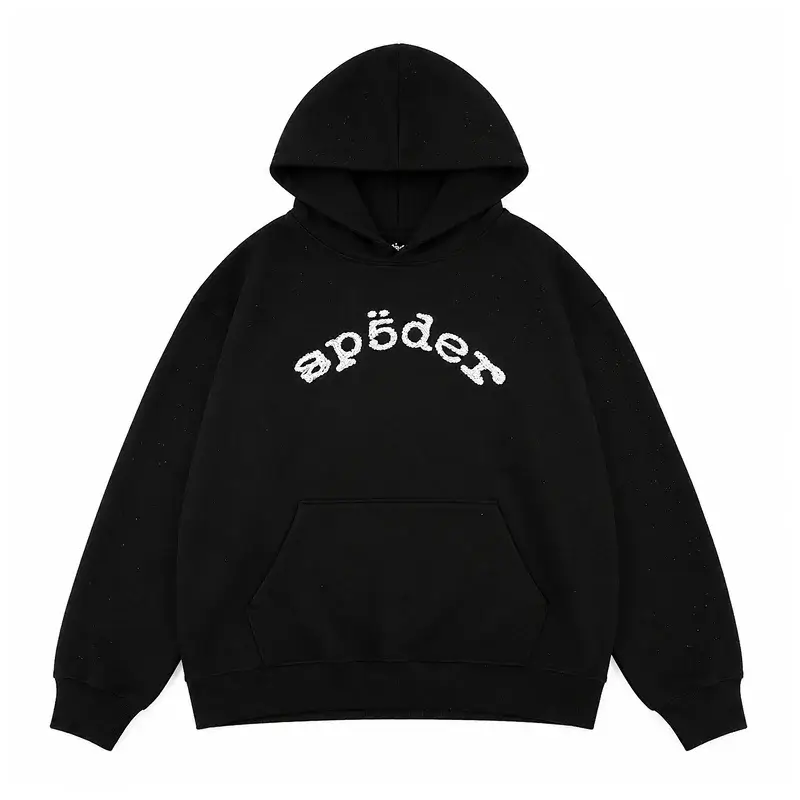
Heavier fabric holds its own shape instead of collapsing onto your body, and that changes the whole silhouette. A 450 GSM hoodie stands slightly away from the torso, keeps a clean drop shoulder line, and makes cuffs and hems look intentional rather than limp. This is why the oversized, boxy streetwear look almost always relies on heavyweight fleece; try the same cut in a 240 GSM fabric and it just looks like a hoodie two sizes too big. Heavier fleece also takes graphics better. A dense knit gives puff print, chenille, and rhinestone work a stable base, so a statement piece like our OG Web V2 Phantom Zip Up in Black keeps its graphic flat and crisp instead of rippling.
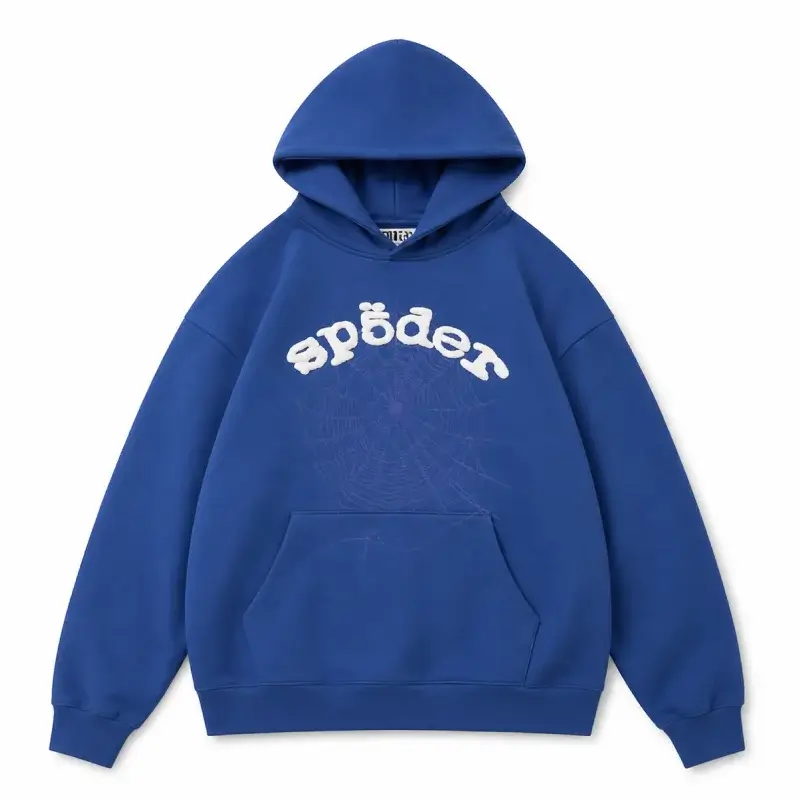
Midweight wins whenever you need range: commuting, layering, travel, and any climate with real seasons. A 300 to 350 GSM hoodie fits under a denim jacket or a puffer without turning you into a marshmallow, packs into a carry-on without eating half the bag, and stays comfortable indoors where a true heavyweight can feel like a sauna. It also dries faster after washing, which matters more than people admit if a hoodie is in weekly rotation. If you live somewhere with mild winters, or you mostly wear hoodies indoors and in the car, midweight is honestly the better daily driver, and something like our Legacy Hoodie in Blue will get far more wear than a heavier piece would.
Two hoodies at identical GSM can still feel completely different, because weight says nothing about fiber content, knit style, or finishing. Cotton-heavy fleece feels dry and gets softer with age; high-polyester blends feel smoother out of the bag but can pill and trap odor sooner. French terry has loops on the inside and wears cooler, while brushed fleece is napped and noticeably warmer at the same weight. Loopwheeled and tightly knit fabrics feel denser than their number suggests. So use GSM as your first filter, then read the fiber content: for a daily hoodie, look for at least 70 percent cotton at your chosen weight, and treat the GSM number as the floor of quality, not proof of it. The same weight logic decides the warmth fight in our hoodie vs sweatshirt comparison, where a light hoodie loses to a heavy crewneck.
If a listing does not state GSM, the garment weight gets you close: a size L pullover under 550 grams is almost certainly lightweight, 550 to 750 grams is midweight, and anything over about 800 grams is heavyweight territory. In person, the tests are even simpler. Pinch the fabric and fold it; heavyweight fleece resists the fold and springs back. Hold a sleeve up and let it hang; heavy fabric falls in a straight, weighted line while light fabric flutters. And check the hood itself, because a heavyweight hood stands up around the neck instead of lying flat on the back, which is half the look people are paying for.
No. GSM measures weight, not quality. A heavy fabric can still be loosely knit or poorly finished. Judge weight and fiber content together, and remember that the right weight depends on how you plan to wear it.
Cotton-rich heavyweight fleece can shrink 3 to 5 percent if you wash it hot and tumble dry it. Wash cold and air dry and shrinkage stays minimal at any weight.
Aim for 400 GSM or more. Oversized cuts depend on fabric that holds structure; lighter fleece collapses and makes the same cut look sloppy instead of boxy.

We use cookies to enhance your experience and show you relevant content and offers.